

The aim of a product comparison article is to compare two or more products based on their features and benefits in order to help the reader decide which one best suits their needs.
The goal is for readers to come away from the post with knowledge about both or all of the competing products so that they can make an informed decision when purchasing them.
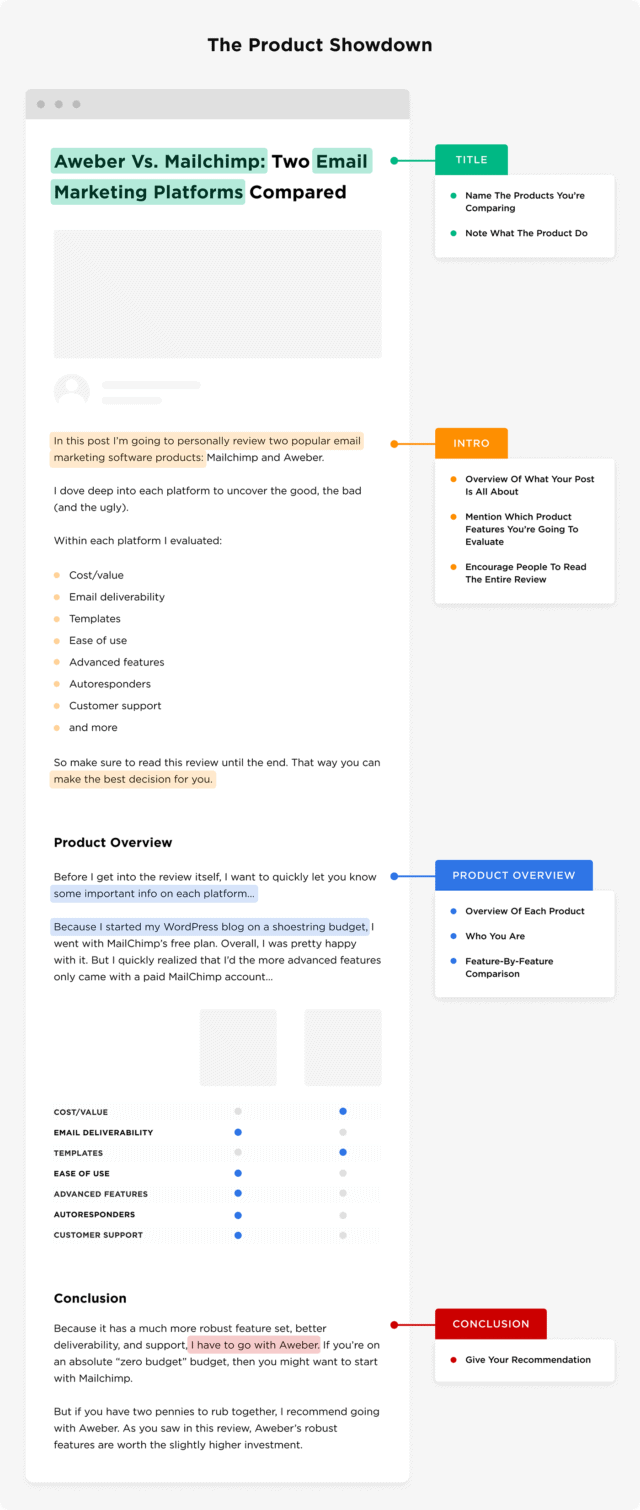
Title
The key to crafting a great article title for product comparison posts is by making it descriptive, relevant and attention-grabbing.
Here are some tips:
- Include the names of both products being compared in your headline
- Use words like “versus” or “vs” which create an interesting contrast between two competing items
- Add adjectives that emphasize what you believe makes one better than another (e.g., “Ultimate,” “Best Value,” etc.)
- Highlight features commonly associated with each item so readers can get an idea of topic before clicking over (e.g., “Speed vs Price Comparison”)
Intro
An effective introduction should grab the reader’s attention and make them curious to learn more.
You can achieve this by providing details on what your post is about, such as:
- Which two products you are comparing,
- why they matter (e.g., potential cost savings),
- any relevant features that will be discussed in detail within each product review section,
- personal anecdotes/experiences related to using one of the products being compared,
- include a call-to-action at end of the intro so readers know exactly how their time spent reading will benefit them in some way – whether it’s choosing a better option for themselves or learning something new from expert comparison reviews like yours.
Product overviews
This should start with setting yourself as an experienced person qualified to carry out this review.
After this, you can give a high-level overview of each product.
Feature-By-Feature Comparison
When crafting a feature-by-feature comparison in your product comparison post, it’s important to break down each individual feature.
This means looking at the good and bad for both products so that readers can make an educated decision about which one is right for them.
Focus on key features that are most relevant or popular with users of these two (or three) products you’re comparing such as:
- cost/value;
- compatibility & integrations;
- customer service options & support processes;
- user experience including design, ease of use and navigation flow etc.;
- usability testing feedback from customers who have used similar platforms previously).
Also list out any pros and cons associated with each product too – this helps people easily determine if they should choose one over another based on their specific needs.
Finally don’t forget to include information like pricing plans – what works best depending upon usage requirements?
These details will help create more clarity when making decisions between different solutions available in the market today!