

A list post is a type of blog post organized in a list format. List posts typically include a numbered or bulleted list of
- tips,
- tools,
- techniques,
- myths,
- mistakes,
- or other items that a reader can use as a reference.
List posts can be used to share helpful advice, provide a tutorial, or discuss a certain topic in an easy-to-understand format.
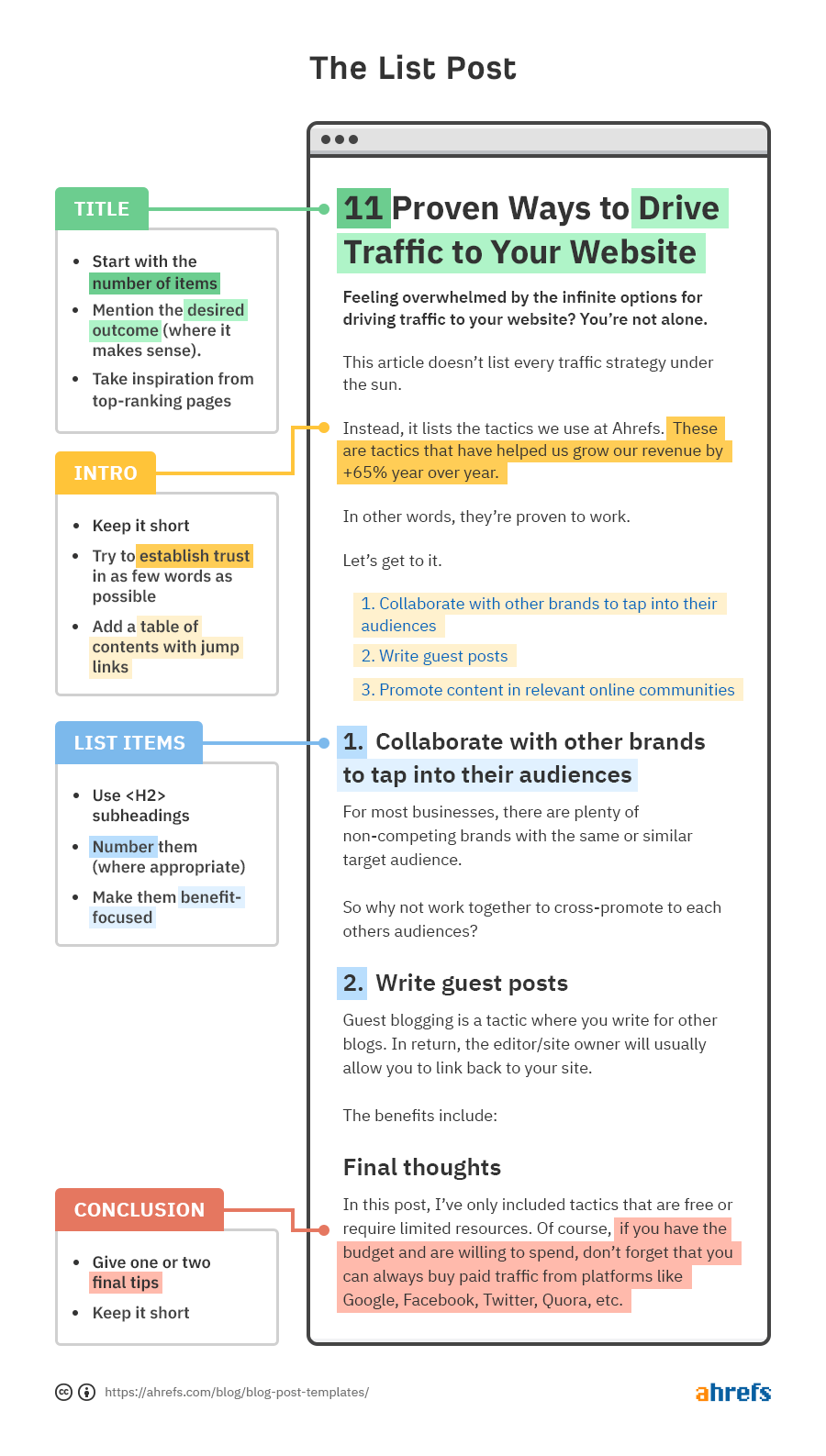
Create a numbered title
Your list post title needs three things:
- A benefit – First, you need to state the benefit that someone will get out of reading your post. There’s no need to be overly creative here. Simply name the benefit.
- The number of items – Next, you need the number of items on your list. If possible, start your title off with that number.
- A short timeframe – If it makes sense, you want to demonstrate a specific time frame that shows how actionable your content is
Use one of these templates and fill in the blanks.
- XX Ways to [Desired Outcome]
- XX [Topic] Tips
- XX [Type] Tools
- XX Reasons Why [Problem]
- XX [Topic] Techniques
- XX [Products] For [Audience]
Just make sure it’s readable and aligns with the content that you’ll be sharing in your blog post. If your post is about weight loss tips, don’t call it “13 Reasons Why You’re Not Losing Weight.”
Beyond that, feel free to make your title more compelling by adding a benefit or including relevant power words. For example:
10 Ways to Get More YouTube Views → 10 Easy Ways to Get More YouTube Views (Even If You Have Zero Subscribers)
Write a short intro
Most people skim list posts, so there’s no point in writing a long introduction.
The intro should be 2-4 sentences, and cover:
- An introduction to the problem the reader has
- The benefit they’ll get from reading your post
- Establish trust in as few words as possible.
Use subheadings for list items
Every list item needs an <H2> subheading. Usually, these will be numbered, but they don’t have to be.
The role of these subheadings is:
- To break your content up into manageable chunks.
- When a subheading is benefit-rich, it boosts the perceived value of your content.
So each of your subheadings should contain two things:
- An overview of what that tip is
- A clear benefit
Here are some good vs bad examples for the same topic.
Good sub headings
Torch Fat With a Protein-Rich Breakfast.
Save $200/Month on Car Insurance With One Phone Call
Bad sub-headings
Eat Protein at Breakfast
Save Money on Car Insurance
Conclude with a final tip
Every blog post deserves a conclusion. For a list post, you can do a few things:
- Give one or two final tips.
- Push the reader to take action towards a desired benefit